Bilingual across every channel — without hiring
Spanish-speaking customers don't pick the channel you're best at — they pick WhatsApp. How to serve them everywhere without hiring.
The gap in your customer base
If your business is in Texas, Florida, California, Arizona, New York, New Jersey, or Illinois, somewhere between 15% and 40% of your potential customers prefer Spanish. The 2024 American Community Survey put it at over 42 million U.S. Spanish-speakers, with a growing share who specifically prefer Spanish for service-business interactions — bookings, complaints, scheduling.
The part most small business owners miss: Spanish-speaking customers convert at a higher rate, not lower, when they reach a business that speaks their language. But they don't pick the channel you're best at. They pick the channel they're already in.
And increasingly, that channel is WhatsApp.
Why WhatsApp matters specifically
Among U.S. Hispanic adults, WhatsApp adoption is over 70% (Pew Research, 2023). Among first-generation immigrant customers from Mexico, Central America, Cuba, Venezuela, Colombia, and most of Latin America, it's the primary channel for business communication — well above SMS. Asking a Spanish-speaking customer to "just call us" or "text our regular number" feels, to them, like asking an English-speaking customer to fax you.
A few patterns we see in real customer data:
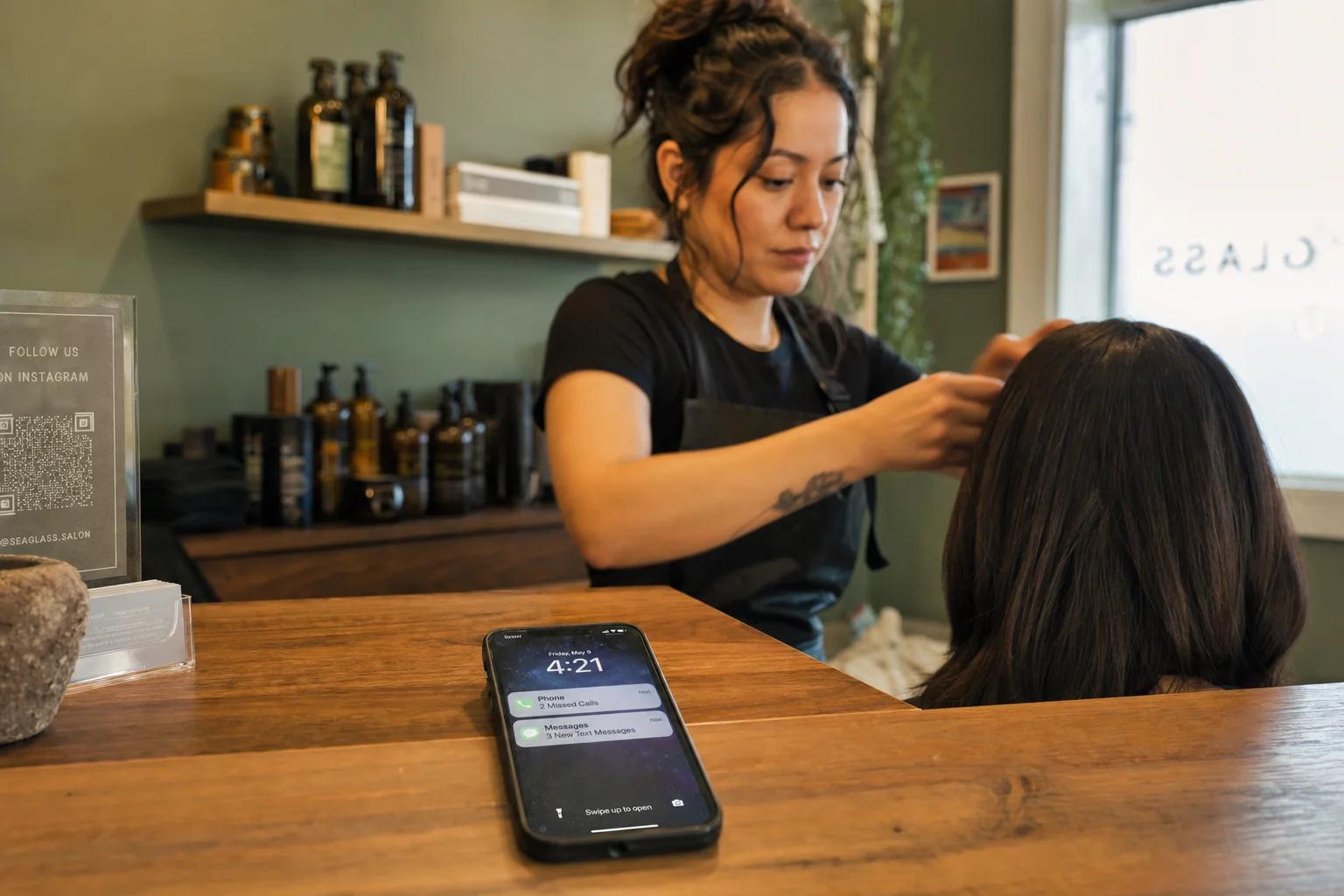
A salon in Houston gets a WhatsApp message at 9pm: "Hola, ¿tienen cita para mañana?" The owner doesn't see it until 8am. By then the customer booked elsewhere.
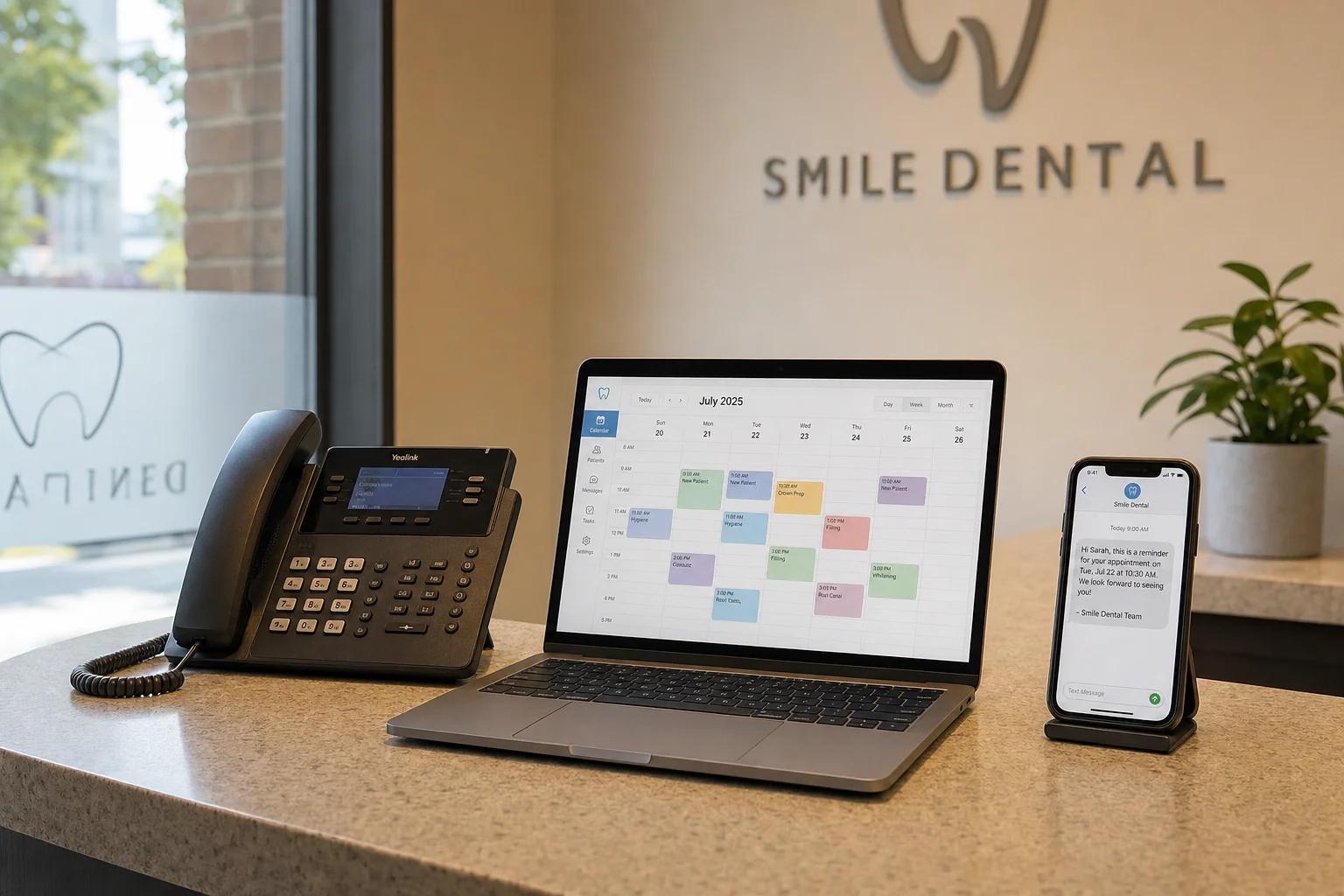
A dental clinic in Miami has a "se habla español" sign in the lobby but no one in the office actually speaks Spanish during the lunch shift. A walk-in caller switches to Spanish mid-call. The receptionist freezes.
A contractor in Phoenix gets a Spanish text asking for an estimate. The owner replies in English with Google Translate. The customer goes silent.
Each of those is revenue walking to a competitor that meets the customer in the right language, on the right channel.
The hiring math doesn't work
A bilingual front-desk hire commands a 10–20% premium over a monolingual one. For a small salon or clinic, that's an extra $400–$1,200/month. And you still have the original problem: one person can't watch the phone, the SMS line, the WhatsApp number, and the website chat at the same time.
Outsourcing to a bilingual answering service adds cost without solving the channel problem. They handle calls, badly. They don't handle WhatsApp at all. They have no idea what's on your calendar.
What an AI agent actually changes
A modern AI agent runs on the same brain across every channel, in both languages, switching mid-conversation:
Phone: customer calls. AI detects they switched to Spanish in their second sentence. AI switches with them. No re-routing, no hold music, no different team.
SMS: customer texts in English on Monday. The reply is in English. Texts in Spanish on Thursday. The reply is in Spanish. Same brain, same customer record.
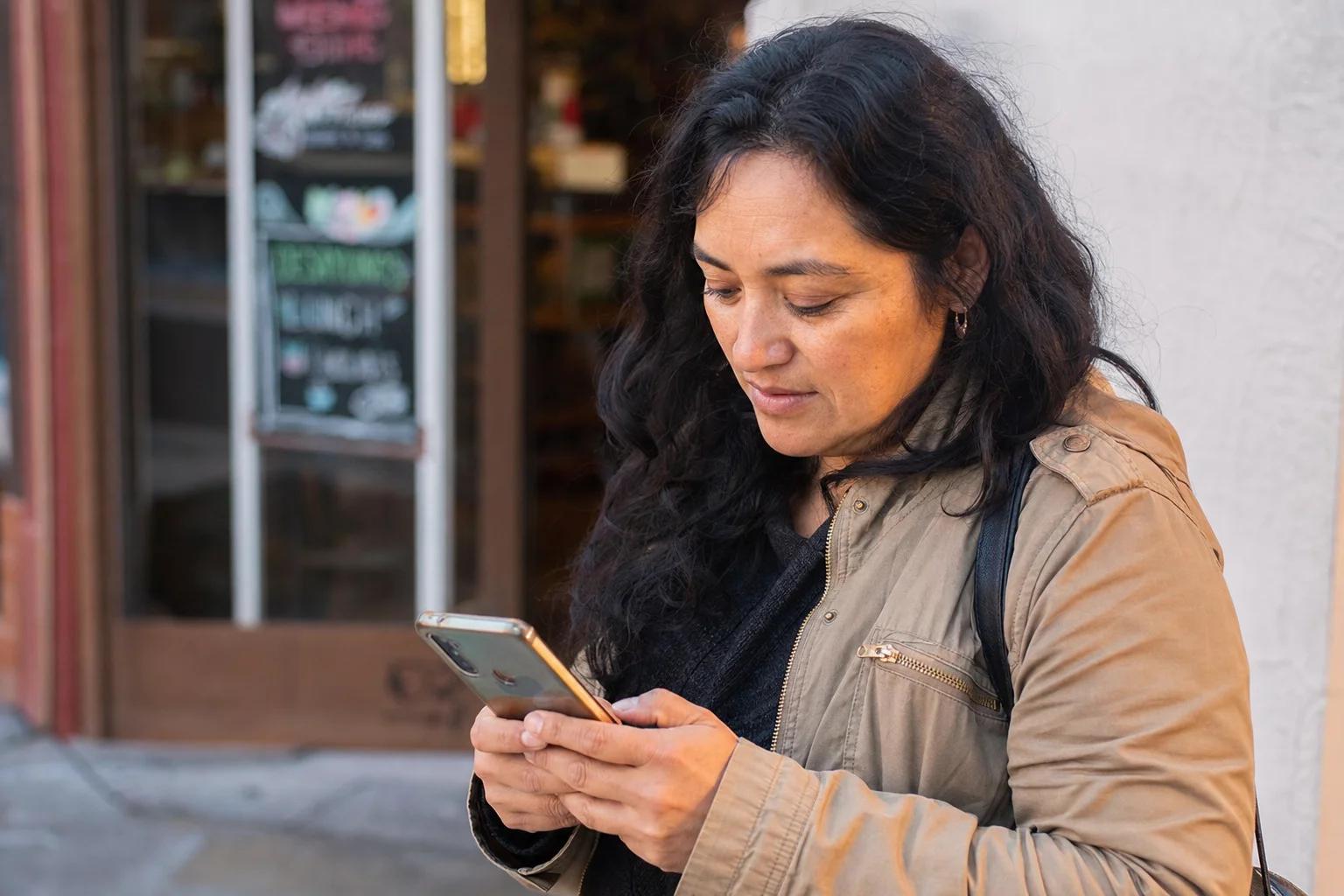
WhatsApp: customer messages in Spanish from their family group's number. AI replies in Spanish, books the appointment, sends the confirmation, all within WhatsApp. Customer never has to change apps.
Web chat: a visitor on your
/es/site opens the chat widget. The first message from the AI is in Spanish, automatically.
What that means for your business:
Every call is answered in the caller's language. Not most calls. Every call.
Every text or DM comes back in the same language it was sent in.
No premium hire required. Bilingual capability is built in. No "Spanish add-on" to pay for.
Same calendar, same booking flow, same deposit links — all the AI's tools work in both languages.
A concrete example (composite from customer interviews)
The salon owner pattern we hear most often: she runs a hair salon in Houston, speaks both languages, but she can't be at the front desk and at her station at the same time. Her assistant only speaks English. Before any kind of bilingual automation:
~20% of phone calls came in Spanish.
~40% of WhatsApp messages sat unread for hours.
Owners in this position typically estimate 8–12 Spanish-speaking new clients lost per month. At an average new-client value of $300 over six months, that's $30,000+ per year walking out the door.
After deploying a bilingual omnichannel AI agent:
Every Spanish call gets answered in Spanish on the first ring.
WhatsApp messages get a reply within seconds, in Spanish, with a booking attached.
Spanish-speaking customers book at the same rate as English-speaking customers.
The owner stops trying to be in two places at once.
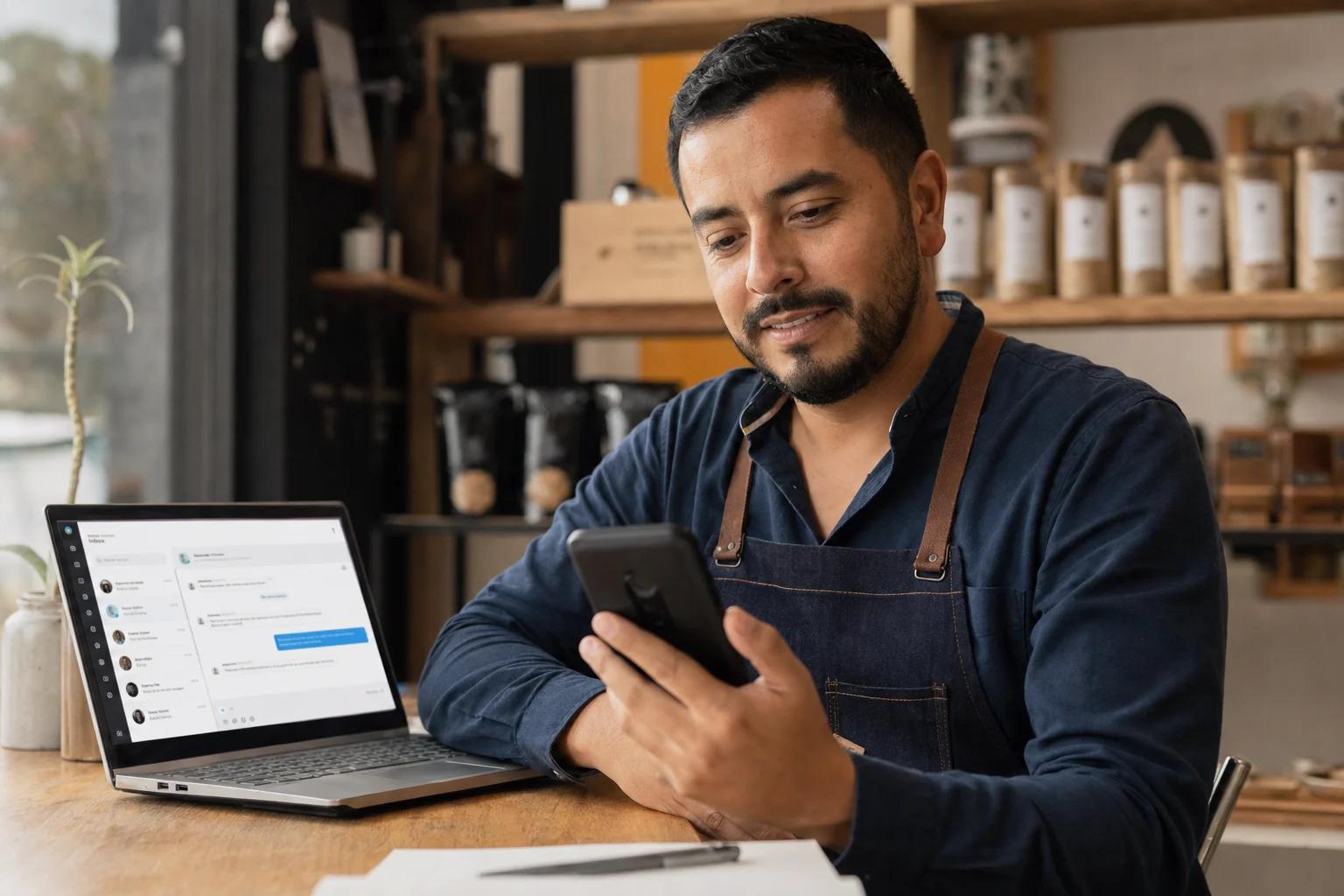
Unified inbox: one place to see all of it
Here's what most "bilingual receptionist" solutions miss: they cover one channel. The same customer who WhatsApps in Spanish on Saturday will call in English on Monday and walk in on Wednesday. If those three touches live in three separate tools, you don't have a relationship — you have fragments.
A real AI agent merges every channel into one customer record. When Maria opens the dashboard and sees "Ana Martinez," she sees the WhatsApp thread, the call transcript, and the in-person notes — in chronological order, automatically detected as the same person by phone number.
This is the part of "bilingual" that has nothing to do with language. It's about treating the customer as one person, not as a separate ticket on every channel.
Three signals you're losing bilingual business
Your call log shows numbers from area codes with high Spanish-speaking populations, but your booking rate from them is below your overall rate. The calls aren't converting because the language is wrong, the channel is wrong, or both.
Your WhatsApp Business inbox has dozens of unread threads. That's revenue.
Your front-desk team mentions "they hung up" or "I told them I'd find someone" more than once a week. That's the moment the customer is gone.
What to do this month
Audit one week of every channel. Count how many calls, texts, WhatsApps, and chats are in Spanish (or switched to Spanish mid-conversation). Multiply by your average new-customer lifetime value.
Don't hire. Hiring a bilingual receptionist solves one shift on one channel. AI solves every shift on every channel.
Try a bilingual omnichannel AI agent for two weeks. Sarase is bilingual by default across phone, SMS, WhatsApp, and web chat — automatic language switching, unified customer records, deposit links and reminders in the right language. No add-on. No setup tax. Configure it once and it handles every customer in their language, on their channel, from then on.
If you want to see it for your specific industry, jump to hair salons, dental clinics, driving schools, contractors, or restaurants.
Frequently asked questions
- Does the AI's Spanish actually sound native?
- Yes. We use modern neural TTS voices and the conversational LLM was trained on natural Spanish, not translated English. Latina and Latino voices available; you can preview them during setup.
- What if a customer code-switches mid-sentence?
- The AI follows. It detects the language shift on the next utterance and replies in that language, then continues in whichever one the customer is using. Same on SMS and WhatsApp threads.
- Do customer records merge across languages?
- Yes. Conversations are organized by customer (phone number / WhatsApp ID / web visitor), not by language. If Maria texts in English on Monday and WhatsApps in Spanish on Friday, both threads live in her one record.
- Can I see metrics by language?
- Yes. The analytics dashboard breaks down bookings, calls, and revenue by language so you can see whether your bilingual audience is growing.
Sources
Sarase builds the AI agent for service businesses - one platform for voice, SMS, WhatsApp, web chat, deposits, and CRM. The articles here are written by the team that ships it.
About Sarase