Drop no-shows below 10%: the 4-layer system
Stripe deposits + omnichannel confirmations + automated reminders + post-no-show recovery. The system that drops 20% no-shows to under 10%.
Why a generic reminder isn't enough
If you're using a generic reminder tool, your no-show rate is probably 18–25%. That's not because reminders don't work — it's that one reminder layer doesn't stop the three different kinds of no-show.
A no-show is three problems in disguise:
The customer forgot. Lower-frequency services (annual checkup, twice-a-year cleaning) get this hardest.
The customer remembered but lost interest. Cold-feet pattern. Common on consultations and high-ticket services.
The customer remembered, still wants to come, but didn't want to commit out loud. They figure they'll just not show. No fee, no friction.
You don't fix all three with one text message. You need a three-layer system — and it should run across whichever channels the customer actually uses (SMS, WhatsApp, voice callback). The good news: a modern AI agent runs all three layers automatically.
Layer 1: the deposit (the real no-show killer)
This is the single most effective tool, and it's the one most service businesses skip because they're afraid customers will balk.
They don't. Not when it's framed correctly.
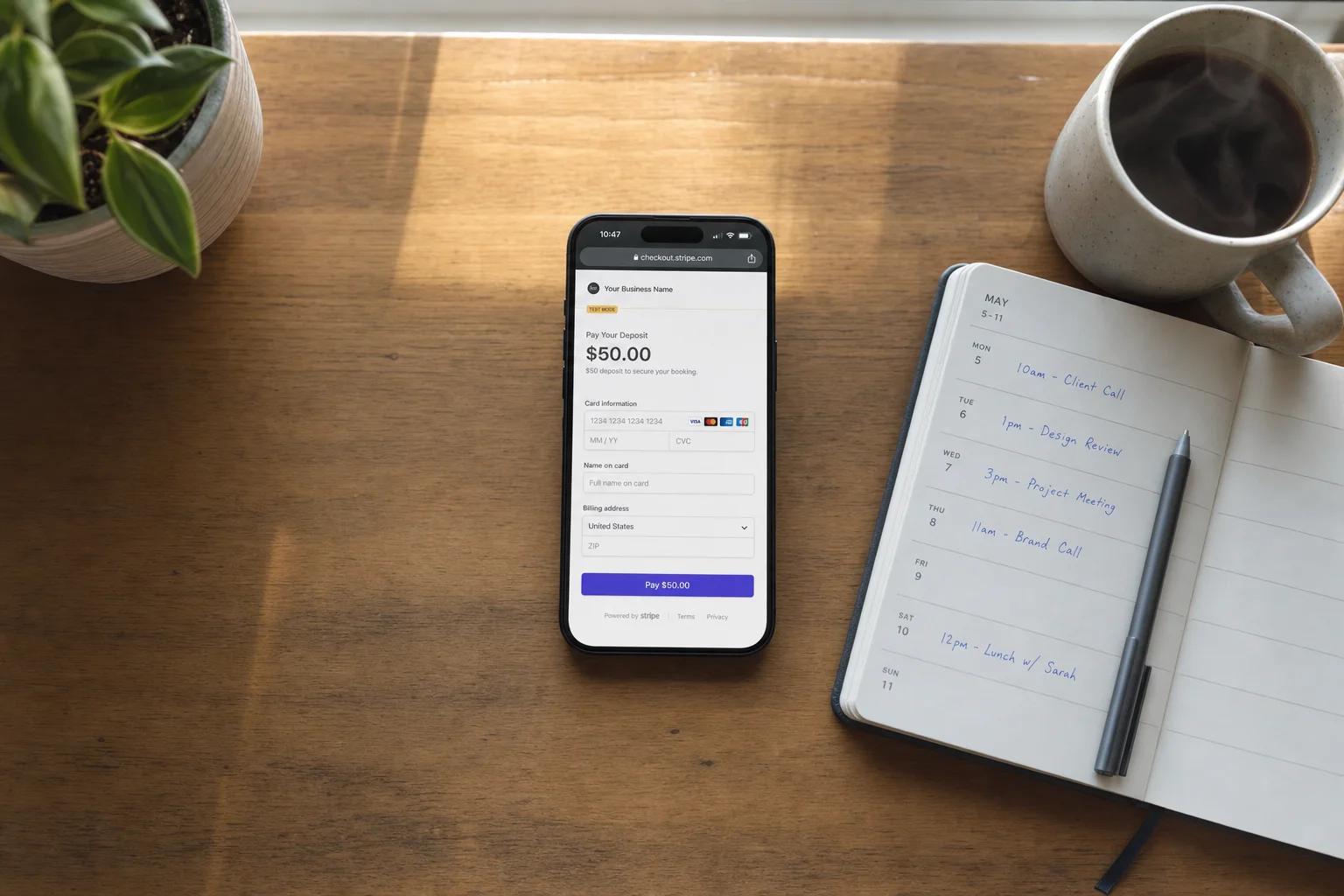
A $50 deposit on a $250 service drops no-shows for that service from ~20% to under 3%. The customer is psychologically committed the moment they pay. They show up.
How it works with an AI agent:
AI books a high-value service (color, extensions, root canal, behind-the-wheel package, free estimate that requires travel).
AI sends an SMS deposit link via your Stripe Connect account — the customer pays with Apple Pay or card.
The slot locks once the deposit clears. If the customer doesn't pay within the hold window, the AI releases the slot.
Money lands in your bank — Sarase doesn't touch it; it's straight Stripe Connect.
Owners who haven't done this before are usually surprised that 80%+ of customers pay the deposit without question. The ones who don't were going to no-show anyway.
Which services should require a deposit? Anything where:
The service is over 60 minutes (your time is the constraint).
The price is over $100.
It's a consultation or new-client visit (highest no-show risk).
It's a peak-time slot (Saturday afternoon, evening).
Layer 2: confirmation at booking, in the channel they used
The second a customer books, the AI sends a confirmation on the same channel the conversation happened on.
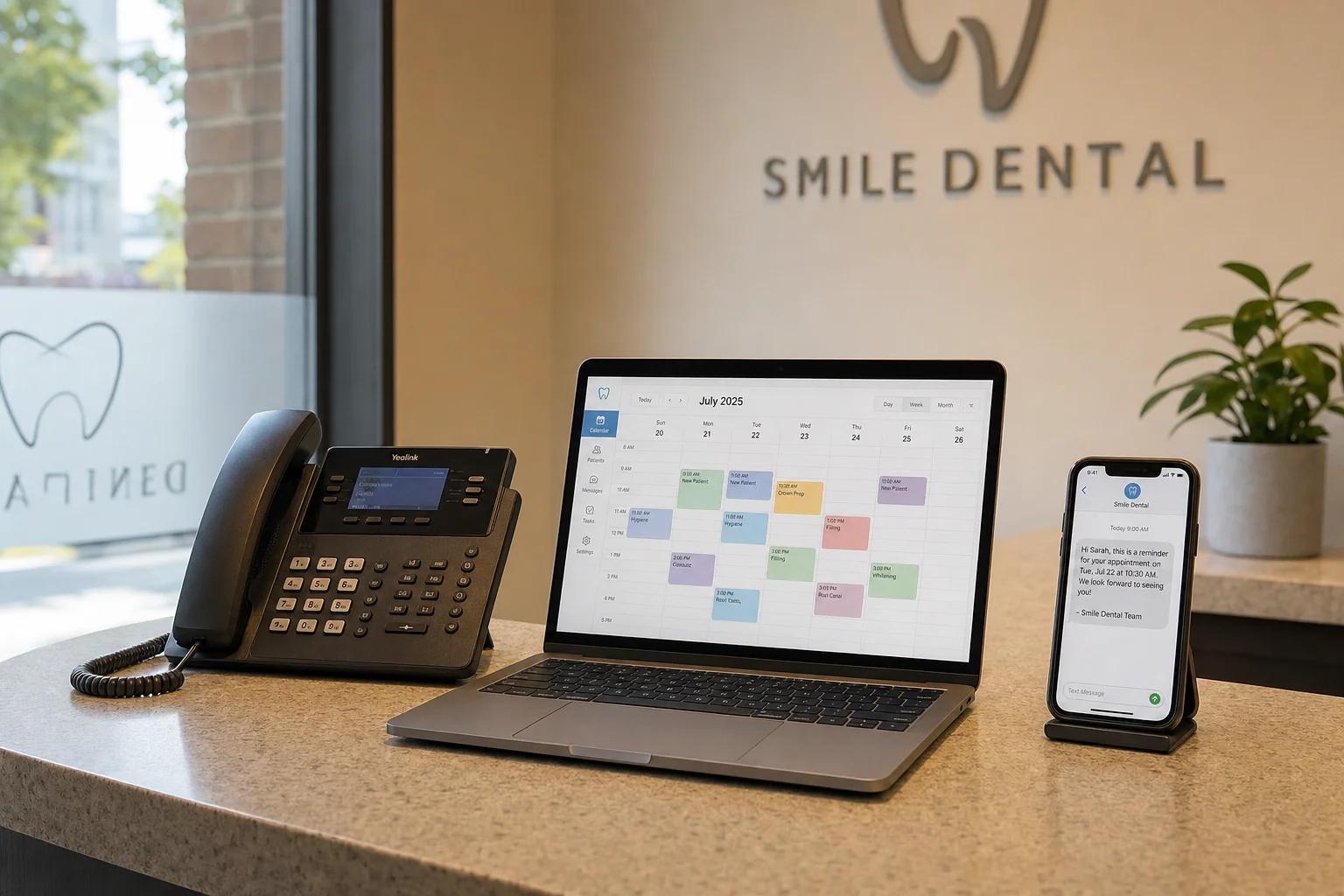
Called and booked? They get an SMS confirmation with the appointment details and address.
Booked via WhatsApp? Confirmation in WhatsApp, in the same language they used.
Booked via the web chat widget? Confirmation in chat plus an SMS backup if they gave a number.
The confirmation isn't just a CYA — it's the customer's first proof that the business is organized. Customers who book and don't get a confirmation start looking for a backup booking elsewhere within 24 hours. Customers who do, generally don't.
The wording matters more than people think:
Hi {first_name}, this is Sara at Bella Hair Studio.
You're booked for a balayage with Sofia on Saturday at 2pm.
Address: 1421 Westheimer Rd, Houston.
Reply R to reschedule or any time to ask a question. See you then!
Three things this does:
Uses a name (the AI's, the stylist's, the customer's) — feels like a person, not a system.
Restates the value (balayage with Sofia) so the customer remembers WHY they booked.
Leaves the door open to chat ("any time to ask a question") so a question becomes a message instead of a no-show.
Layer 3: automated reminders before the appointment
Sarase sends automated SMS reminders before each appointment. You pick the timing during setup (24 hours and/or 2 hours before is the most common pattern).
The reminder isn't a generic "Reminder: 2pm appointment tomorrow." Effective reminders restate value and give an exit:
Tomorrow at 2pm — your balayage with Sofia.
She'll be using Olaplex to protect your hair through the lift.
Address: 1421 Westheimer Rd. See you then!
Or, closer to the appointment:
Hey {first_name}, just a heads up — see you at 2pm today.
If anything's come up, just reply and we'll find a new slot.
That last line — giving the customer an exit — is counterintuitive but it works. Counterintuitively, telling someone they can cancel reduces no-shows, because part of the no-show problem is avoidance. People feel guilty cancelling. If you give them a graceful exit before they've committed to ghosting, a meaningful percentage will cancel — and that cancellation is gold, because you can fill the slot.
Sarase handles the reply too. If the customer says "Can I move it to Thursday?" the AI checks the calendar, offers options, books the new slot, and texts the confirmation — without bouncing back to you.
Layer 4 (bonus): recovery after a no-show
Most businesses don't message after a no-show, which is the exact moment to message. The customer is in a guilt window — they know they missed, they expect a passive-aggressive call, and instead the AI sends warmth and concrete options:
{first_name}, we missed you at 2pm today! Hope everything's okay.
Want to reschedule? I have Tuesday at 11am or Thursday at 4pm.
About 30–40% of no-shows rebook within 24 hours if you reach out this way, vs ~5% if you wait or never reach out. Sarase sends this automatically when an appointment is marked as missed in the dashboard.
Don't lead with policy. "You missed your appointment, the no-show fee is $25" is correct but kills the relationship. Save the policy conversation for the rebook confirmation, not the recovery message.
The math at scale
Take a salon doing $25k/month with a 20% no-show rate. Average ticket $80. That's:
~$5,000/month in no-shown appointments
~$60,000/year in revenue you booked but never collected
Drop that to 5% (which is roughly what happens with deposits + omnichannel confirmations + reminders + recovery) and you're recovering $45,000/year in revenue from appointments you already had on the calendar.
The cost of the AI agent that does all four layers, end-to-end, in two languages, across phone and SMS and WhatsApp and web chat: $399/month. About $4,800/year, fully loaded.
The math really isn't close.
What goes wrong (avoid these)
Reminders too close together. Two reminders 24h and 2h apart? Fine. Four reminders at 72h, 48h, 24h, 4h? Annoying. People silence the thread.
Generic capitalization. "your appointment Tomorrow at 2pm" looks like a scam text. Sentence case throughout.
Including unnecessary links. Every link is a chance for the customer to bounce. Only include a link when they need to do something (pay deposit, reschedule).
Forgetting the timezone. "2pm" without timezone is fine for local customers; for a driving school with out-of-state students booking ahead, always include the timezone.
Skipping the deposit layer because "my customers won't pay." They will. Three years of customer data across thousands of service businesses confirms it.
What to do this week
Turn on deposits for high-value services — color, extensions, root canals, consultations, anything over 60 minutes. Even before any AI tooling, this alone drops no-shows by half.
Audit your reminder text. If it starts with "Reminder:" — rewrite it. Lead with a name or time.
Add a recovery message to your post-no-show workflow. Most businesses skip this entirely and it's a 5–10% rebooking boost on its own.
Try the full four-layer system. Sarase runs deposits via Stripe Connect, confirmations in the customer's original channel, automated reminders, and post-no-show recovery — all from the same dashboard. Setup takes 10 minutes. The dental, hair salon, driving school, contractor, and restaurant templates ship with deposit and reminder defaults tuned to each industry.
Frequently asked questions
- Won't customers be offended by a deposit request?
- On the services where it makes sense (color, extensions, root canals, consultations, anything over 60 minutes or $100), the vast majority pay without question. Framing as 'to lock in your slot' rather than 'in case you don't show' makes the difference. The ones who refuse were going to no-show anyway.
- What if the deposit doesn't clear?
- The slot is held for a configurable window (default 30 minutes). If the deposit doesn't clear in that time, the slot releases automatically and the AI offers it to the next person in queue or marks it available again.
- Can I set different deposit rules per service?
- Yes. Each service has its own deposit configuration — required vs optional, fixed amount or percentage, and the hold window.
- Does the money go to Sarase or to me?
- Straight to you. We use Stripe Connect, which means your business has its own Stripe account; Sarase never touches the funds. You see the payout in your bank account on Stripe's normal schedule.
Sources
Sarase builds the AI agent for service businesses - one platform for voice, SMS, WhatsApp, web chat, deposits, and CRM. The articles here are written by the team that ships it.
About Sarase